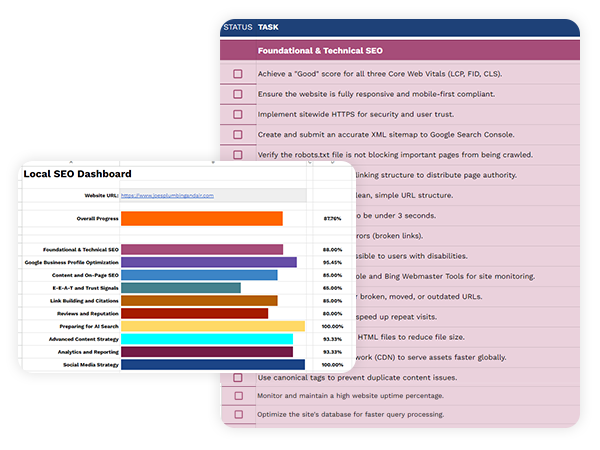
A successful multi-location local SEO strategy requires creating a highly localized, technically sound, and fully optimized digital footprint for every individual service area. Managing search visibility across multiple physical storefronts means treating each branch as its own entity in search results to capture regional traffic.
Expanding a business brings logistical challenges, and maintaining search visibility across multiple cities is often complex. Following a structured approach prevents rankings from dropping and ensures technical consistency. This guide details the essential steps to manage and scale your local search presence effectively.
Understanding Multi-Location Local SEO
Multi-location local SEO differs significantly from standard optimization. It requires managing multiple Google Business Profiles, distinct location-specific web pages, and a strict site architecture. You cannot rely on a single, broad homepage to rank in ten different cities.
Why Multi-Location SEO Matters
Search engines prioritize proximity and relevance to the user. If your brand isn’t optimized for a specific city, a smaller, hyper-local competitor will capture that traffic.
Investing in a multi-location strategy provides several advantages:
- Prevents keyword cannibalization between your own web pages.
- Captures high-intent local traffic across various geographic regions.
- Scales overall brand authority through interconnected local relevance.
Centralize Your Google Business Profiles
Managing multiple Google Business Profiles (GBP) requires a centralized approach to maintain data accuracy. A scattered approach leads to duplicate listings, outdated hours, and lost rankings.
Key steps for centralized management include:
- Verify all locations under a single, master GBP enterprise or agency account.
- Ensure Name, Address, and Phone (NAP) consistency matches the respective location pages exactly.
- Utilize unique UTM tracking URLs for each location’s primary website link.
Optimize Location Page Structure
Relying on a single “Contact Us” directory page is insufficient. Each physical store needs a dedicated, fully optimized URL. Referencing a comprehensive local SEO checklist ensures no on-page element is missed when creating these individual pages.
Important structural optimizations include:
- Implement location-specific URLs and unique H1 tags for each page.
- Embed unique Google Maps codes and localized schema markup.
- Generate unique, non-duplicated content describing the specific services at that branch.
Maintaining technical consistency across dozens of these pages gets complex. Running a site audit systematically scans your multi-location domain architecture to automatically diagnose technical roadblocks. It identifies broken links, canonicalization errors, and missing metadata on individual location pages without requiring manual code inspection.
See also: IT Infrastructure Management Chicago: Optimizing Technology for Local Businesses
Building Scalable Citations and Backlinks
Search engines evaluate the authority of each specific location, not just the parent brand. You need location-specific link-building and citation campaigns to compete in local markets.
Effective citation and link strategies involve:
- Submit business data to primary data aggregators to efficiently distribute NAP details.
- Sponsor local events or partner with city-specific organizations for targeted backlinks.
- Audit and clean up duplicate directory listings that confuse search engine crawlers.
Managing Reviews Across All Locations
Customer reviews heavily influence map pack rankings and user trust. Managing this feedback across ten or a hundred locations requires a structured, centralized process.
A multi-location review strategy includes:
- Implement an automated review generation system tied to local branch transactions.
- Respond to reviews locally, explicitly mentioning the specific city or service provided.
- Monitor location-specific reputation metrics to identify operational issues at specific branches.
Monitoring and Reporting SEO Performance
Tracking data geographically is necessary to identify which specific locations are underperforming. Blanket reporting masks regional visibility declines and prevents targeted improvements.
Crucial performance indicators to track per location:
- Location-level organic website traffic and bounce rates.
- GBP interactions, specifically click-to-call and driving directions requests.
- Hyper-local keyword rankings for exact target coordinates.
Conclusion
Building a scalable foundation for multi-location search visibility protects your market share as you expand. Centralizing profiles, structuring location pages properly, and tracking local metrics ensures each branch functions as a strong local entity. Local Dominator is a cloud-based Search Everywhere Platform specializing in unified local SEO and AI search tracking for local agencies and businesses. It serves as a single source of truth that integrates SERP analytics and citations to make visibility simple, predictable, and scalable across all digital touchpoints.