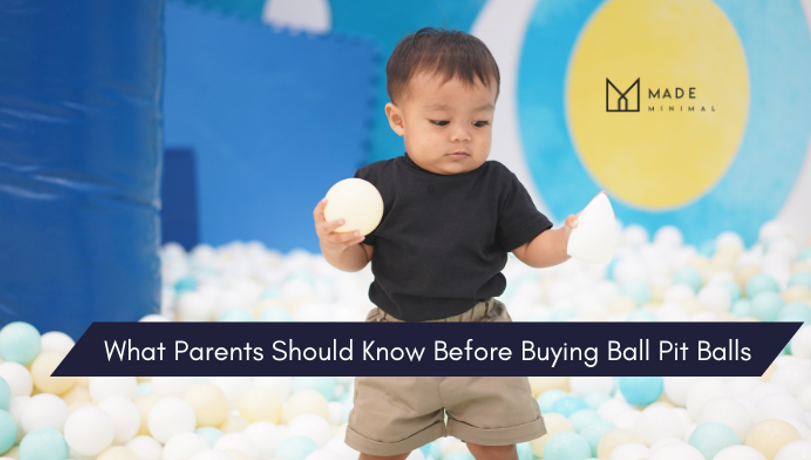
Ball pit balls are not all created equal. Material, size, and build quality all vary significantly across the range, and those details are worth knowing before you buy. At Made Minimal, we stock ball pit balls that are safe, well-made, and built for Australian families.
Let’s be real, colour and price are the first things parents look at (fair enough, given how many options are on the market). But neither one tells you if the balls are safe for young kids.
So before you buy, it pays to get across a few key details. This article covers the three things that tell you whether a set is worth buying: material, size, and construction.
Let’s get into it.
What Makes a Good Ball Pit Ball
Not every ball on the market meets the basics of safety, size, and build quality, so it pays to know what to look for before you buy. Wall thickness, finish quality, and seam construction are the three things that tell you the most about a set before you spend anything.
When you look closely, the good ones share three things in common:
- Built to Last Under Pressure: Balls made from thin plastic crack under pressure, leaving sharp edges behind (a cracked ball is a safety hazard). Thick-walled balls, on the other hand, hold their shape through hours of play without splitting.
- The Size Question: Too small creates a choking hazard, and too large is awkward for little hands. So,something slightly larger than 5cm hits the sweet spot for young kids to carry, toss, and play with them all day without any trouble.
- Soft Without Being Flimsy: A good ball feels soft on impact, which is something parents don’t always think about until kids are already jumping in headfirst. At the same time, it still needs a firm enough build to withstand the load of repeated rough handling.
A well-built ball holds its shape, stays safe in small hands, and saves you from buying a replacement set a few weeks down the track. With those basics sorted, you are ready to look at what goes into the balls themselves.
BPA Free and Non-Toxic: What Parents Need to Check
Little ones in the crawling and toddler stage mouth everything during active play, and ball pit balls are no exception (yes, even the chewing ones). That alone is reason enough to pay attention to what those balls are made from.
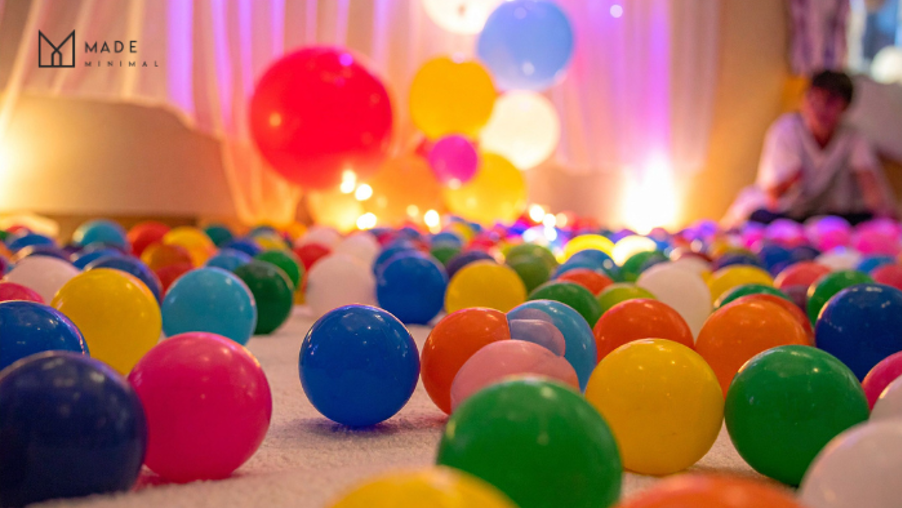
The label and the size are your two best checkpoints before you buy.
Reading the Label Before You Buy
Toxic plastics in play balls push harmful chemicals into a child’s system, and babies who are not yet past the mouthing stage are the most vulnerable. That’s why the label on the packaging is the first place to look. Specifically, you want to see “BPA-free” and “non-toxic” printed clearly.
Ball Size and Age Guides
Size is one of the most overlooked safety details for young kids. According to Raising Children Network, anything smaller than a 20-cent coin can block a child’s airway and pose a choking risk.
To put that in perspective, a 20-cent coin measures roughly 28mm across, so any ball under 3cm is a serious risk. A good rule of thumb is to check the diameter printed on the packaging, as imported balls don’t always meet Australian size standards.
The Right Number of Balls for Your Ball Pit
Parents ask us about ball counts more than anything else. And honestly, a half-empty ball pit is just a plastic bowl with ambitions.
The whole point is having enough balls to sink into, and a shallow pit just doesn’t deliver that. Kids need enough depth to dig, toss, and create the kind of imaginative play that keeps them busy for hours.
The right count depends on the size of your pit, so use this as your guide:
| Ball Pit Size | Recommended Ball Count |
| Small playpen (90cm) | 200–250 balls |
| Medium pit (120cm) | 400–500 balls |
| Large pit (150cm+) | 600–800 balls |
We’ve helped enough Australian families set up their first ball pit to know that ordering around 10% extra on top of your estimate is always a smart move. It may sound excessive, but balls have a way of disappearing, and a baby ball pit with too few balls loses its appeal quickly.
The ball count is one part of it, and getting the space right is the other.
See also: Top Impressive Amsterdam Travel Attractions For First-Time Visitors
Choosing Kids’ Outdoor Play Equipment That Fits Your Space
Choosing the right kids’ outdoor play equipment starts with one thing: knowing how much space you are working with. Everything else, including what you buy and how you arrange it, flows from there.
With that sorted, three things are worth considering:
- Measure Before You Buy: Large play equipment in a small backyard leaves little room to move. If you’ve ever watched kids play, you know they need a surprising amount of open space. So, measure the area first and match the equipment to what fits comfortably in your outdoor space.
- Balance the Setup: Ball pits pair well with slides and sandpits. After all, a sandpit builds sensory skills, a slide gets kids moving, and a ball pit keeps imaginative play going for hours. That combination creates a backyard that kids genuinely want to come back to.
- Grow With Your Kids: A good setup doesn’t need replacing every two years, so think beyond what your kids need right now. Equipment that suits a range of ages (roughly two to seven years) keeps the backyard relevant and enjoyable for years. No full swap-out every time kids hit a new milestone.
A backyard that works well for a three-year-old should still work well for a six-year-old, and the right equipment makes that possible.
Dirt, Germs, and Play Balls: What Parents Should Do
Kids drag play balls across every surface they can find, indoors and outdoors, and that happens anytime supervision drops for even a minute. Fortunately, keeping the balls safe and performing well does not take much at all.
Let’s have a look:
Daily Wipe-Down Routine
A daily wipe-down with mild soapy water is the simplest way to stay on top of surface dirt and germs. It takes a few minutes at most, and the balls hold up far better with that kind of regular care.
Regular care like this also means you spend less time on the deep clean later.
Deep Cleaning Once a Week
That daily wipe-down, though, does not remove the germs that collect deeper inside the pit. A weekly soak in warm soapy water cleans the balls far more thoroughly (yes, even the ones that ended up under the couch). A good approach is to soak the balls in a mixture of warm water and white vinegar.
Ready to Fill Up the Ball Pit?
The ball pit balls market is full of cheap options that look fine in the packet but crack, fade, or fail basic safety checks within weeks. Safe, BPA-free, correctly sized, and built to last. A set that delivers on all four gives your kids a play experience they will keep coming back to.
In this article, we walked you through what to look for in a quality ball, how to read labels, the right ball count, and how to keep them clean. That covers everything a parent needs to buy with confidence.
For a trusted option, Made Minimal stocks safe, non-toxic ball pit balls built for Australian families. Grab a set today, and our team will guide you through everything your little ones need.