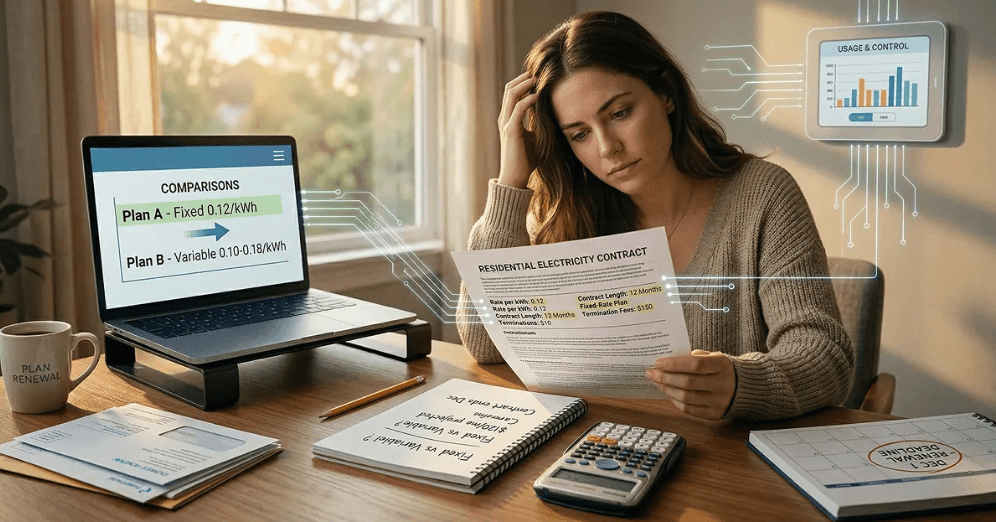
For most businesses, electricity is one of those costs that gets paid without much scrutiny. The direct debit goes out, the lights stay on, and attention moves to other priorities. But for the majority of UK businesses that have never actively reviewed their electricity contract, that approach is quietly costing them money every single month.
The business electricity market is competitive and regularly shifting. Suppliers adjust their rates, new entrants bring better offers, and the difference between what one company pays per unit and what another pays for identical consumption can be substantial. The businesses benefiting from the best rates are typically those that have taken the time to shop around. Using a business electricity comparison service is one of the most effective ways to benchmark your current tariff against the wider market without approaching each supplier individually.
How Business Electricity Contracts Differ From Domestic Ones
Business electricity contracts are not regulated in the same way as domestic ones. This means suppliers have more freedom to structure pricing, and businesses do not benefit from the same level of consumer protection that households receive. It also means that out-of-contract or deemed rates, which apply when a business has let a contract expire without renewing, can be extraordinarily high.
Contracts are typically available on fixed or flexible terms. A fixed-rate agreement locks in a unit price and standing charge for the length of the term, usually between one and four years. A flexible arrangement allows businesses to purchase electricity at different points in the market cycle, which can produce savings but requires active management. Most small and medium-sized businesses are better served by a fixed contract, which makes forecasting costs far more straightforward.
What Happens When a Contract Expires Without Action
When a business electricity contract reaches its end date and no action is taken, the supplier rolls the account onto a deemed or out-of-contract rate. These rates are set by the supplier with no competitive pressure to keep them reasonable, and they are often significantly higher than standard contracted rates. Some businesses remain on these rates for months or years simply because no one flags the expiry.
A company consuming 50,000 kWh of electricity per year could easily pay hundreds or even thousands of pounds more annually by staying on a rolled-over rate rather than switching to a better deal. This is one of the most common and most costly oversights in business energy management.
The Switching Process in Practice
Switching business electricity suppliers is generally simpler than businesses expect. The process starts with checking the existing contract’s end date and understanding the notice period, which is usually between 30 and 90 days before expiry. Gathering a recent bill to confirm annual consumption and meter details is the next step.
With that information, a comparison across multiple suppliers can be run to see what rates are available. Once a new contract is agreed, the new supplier manages the transfer process. There is no interruption to electricity supply, and no engineer needs to visit the premises. The meter reading is simply logged at the point of switch and the commercial relationship transfers to the new supplier.
Why Multi-Site Businesses Should Consolidate Their Reviews
Businesses operating across multiple sites often manage each location’s energy contracts in isolation, meaning different suppliers, different end dates, and different rates across the estate. Bringing all sites under a single supplier or reviewing them simultaneously often unlocks better volume-based pricing and makes administration significantly easier.
See also: IT Infrastructure Management Chicago: Optimizing Technology for Local Businesses
Frequently Asked Questions
Q: How much can a business actually save by switching electricity suppliers? A: Savings vary by consumption, current rate, and market conditions. However, businesses switching from an out-of-contract or rolled-over rate to a properly negotiated deal often achieve reductions of 20 to 40 percent on unit rates depending on usage volumes.
Q: Do I need to wait until my contract ends to switch? A: Switching before the end of a contract is possible, but most suppliers will charge an exit fee. It is worth calculating whether the savings from the lower rate will outweigh that cost before making a decision.
Q: What details do I need to compare electricity suppliers? A: Your current supplier, annual electricity consumption in kWh, your MPAN number (found on your bill), business postcode, and contract renewal date are the key pieces of information.
Q: How long does it take to switch business electricity suppliers? A: The transfer process typically takes between two and four weeks, though it can be arranged to start from the expiry of the existing contract.
Q: Can a sole trader or micro-business switch in the same way as a larger company? A: Yes. Business electricity comparison and switching is available to businesses of all sizes. The options available may vary by consumption level, but the process is fundamentally the same.